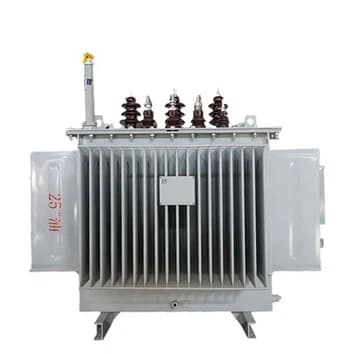
Oil-Immersed Transformer Solutions should be treated as an investment decision, not just a single purchase event. In the context of distribution nodes and production assets that need robust thermal behavior under variable load, teams need to define reliability, safety, and delivery objectives before execution starts. In practice, chief power engineer, procurement, maintenance planner, and compliance manager align on measurable success criteria, document critical constraints, and assign ownership boundaries that prevent late confusion. This discipline turns a potentially reactive project into a controlled program with predictable decision gates and less downstream rework.
The technical execution model has to stay explicit from day one. A practical scope includes model selection, loss analysis, installation planning, commissioning support, and lifecycle maintenance policy. A realistic planning window is selection and procurement in weeks, with operation planning for 20+ year lifecycle decisions. Before field work begins, teams should lock quality checkpoints, switching sequence assumptions, and final acceptance deliverables. When this preparation is done properly, engineering and operations can execute with fewer surprises, while project leadership gets transparent timeline visibility instead of optimistic assumptions that collapse during commissioning.
Risk control is usually the biggest determinant of schedule confidence. Typical threats in this area are undersized rating, inadequate cooling assumptions, and delayed maintenance planning. The mitigation baseline should combine structured governance and operational readiness: commissioning verification, oil condition monitoring, and periodic diagnostics. Teams should also validate compatibility with existing infrastructure, define fallback scenarios, and make escalation ownership unambiguous. Projects with this level of rigor usually avoid cascading delays and costly corrections that appear when decisions are postponed until the final weeks.
Commercial decisions should be based on lifecycle logic rather than headline price only. For this topic, the economic frame is purchase price versus no-load/load losses, maintenance strategy, and outage impact over lifecycle. When this is modeled correctly, owners typically achieve stable long-duration operation, better overload tolerance, and predictable asset performance. Compliance remains a hard boundary: transformer standards, safety spacing, and documented acceptance requirements. Treating compliance as a late checklist item often creates avoidable launch friction, while integrating it early improves approval speed and protects long-term operational stability.
Execution quality improves materially when technical, commercial, and operations teams review decisions in one cadence. A practical reference point is replacement of overloaded legacy units with right-sized high-efficiency transformer fleet. Programs run this way usually end with more than a completed contract: they deliver reusable documentation, maintainable operating routines, and a credible foundation for future capacity expansion without restarting analysis from zero.